Jean-Luc Brunel appears in 4,485 documents within the Epstein archive, more than almost any other associate. His name threads through testimony, legal filings, and victim statements as a central figure in what prosecutors described as a sophisticated international trafficking operation. He ran modeling agencies. He had access to vulnerable young women. And according to multiple accusers, he used that access to supply Jeffrey Epstein.
Brunel founded MC2 Model Management in 2005, reportedly with Epstein's financial backing. Before that, he ran Karin Models in Paris. The modeling industry gave him cover. It gave him credibility. And it gave him a constant stream of aspiring models who wanted careers badly enough to overlook warning signs.
The Accusations
Virginia Giuffre accused Brunel directly. She said he trafficked her to powerful men and that he raped her himself. In depositions and court filings, she described Brunel as someone who brought young women from Europe to the United States under the pretense of modeling work, then delivered them to Epstein. The documents show her attorneys repeatedly tried to question Brunel about these allegations. He avoided deposition for years.
Other women came forward with similar accounts. They described being recruited through modeling channels, promised legitimate work, then finding themselves in situations where the boundaries between professional opportunity and sexual exploitation dissolved. The modeling agency structure provided plausible deniability. Trips could be explained as castings. Meetings could be framed as networking. Money could flow through legitimate business entities.
The Flight Logs Connection
Flight logs place Brunel on Epstein's private jets multiple times. He traveled between New York, Paris, and the Caribbean. The logs show he sometimes flew with young women whose names appear nowhere else in public records. These women had no obvious connection to Epstein's financial or social circles. They appear once, on a flight manifest, often with only first names or obvious nicknames.
The pattern suggests recruitment trips. Brunel would travel to Europe, then return with passengers. Some of these passengers would later appear in witness statements as victims. The modeling agency provided the initial contact point. The private jet eliminated the paper trail that commercial travel would create. The whole system ran on the appearance of legitimacy.
The MC2 Structure
MC2 Model Management opened its doors in New York, Miami, and Los Angeles. Documents show Epstein had financial involvement, though the exact nature of his investment remains murky in the public record. What's clear is that Brunel had access to Epstein's resources and used them to build an international modeling operation.
The agency signed young women from Europe, South America, and Eastern Europe. Many came from economically disadvantaged backgrounds. They saw modeling as a way out, a path to financial security and glamorous careers. Instead, according to court filings, some found themselves trapped in a network where modeling opportunities came with unspoken sexual expectations.
Former models told investigators about parties at Epstein's properties where they felt pressured to please wealthy men. They described situations where refusing advances meant losing promised work. The modeling contract became leverage. The promise of career advancement became coercion.
The Maxwell Connection
Ghislaine Maxwell's legal filings mention Brunel repeatedly. Her defense team argued that prosecutors unfairly focused on her while giving less attention to other enablers in Epstein's network. Court documents reference Brunel as someone who had independent access to Epstein and independent means of bringing young women into his orbit.
Maxwell and Brunel knew each other for decades. They moved in overlapping social circles in New York and Europe. Witnesses described seeing them together at Epstein's properties. The documents suggest they worked in parallel, both facilitating Epstein's access to young women through different channels. Maxwell used her social connections. Brunel used the modeling industry.
The French Investigation
French authorities opened their own investigation into Brunel in 2019. They interviewed former models who described abuse dating back to the 1980s. The allegations extended far beyond his work with Epstein. Multiple women accused him of rape and sexual assault during casting calls and modeling assignments throughout his career.
Police arrested Brunel at Charles de Gaulle Airport in December 2020 as he tried to board a flight to Senegal. Prosecutors argued he was attempting to flee. They charged him with rape of minors, sexual harassment, and human trafficking. He was 76 years old. He had been evading these questions for years.
The Paris Jail Cell
Brunel died on February 19, 2022. Guards found him hanged in his cell at La Santé prison in Paris. He had been held there for over a year awaiting trial. French authorities ruled it suicide. His lawyers said he was distraught and felt abandoned. Victims said they lost their chance for justice.
The timing echoed Epstein's own death in a Manhattan jail cell in August 2019. Both men died before facing their accusers in court. Both deaths foreclosed the possibility of testimony that might have implicated others. Both left victims without the closure of seeing their abusers held accountable.
The Unanswered Questions
Brunel's death means certain questions will never get answered in court. How many women did he bring into Epstein's network? Who else knew about the arrangement? What financial records exist showing the flow of money between Epstein and MC2? Which other powerful men benefited from the pipeline of young models?
The documents show investigators were pursuing these threads. They had witness statements. They had flight logs. They had financial records. But criminal prosecution requires live defendants. Civil cases continue, but they move slowly and settle quietly. The public record remains incomplete.
What we know is this: Jean-Luc Brunel spent decades in an industry that gave him access to vulnerable young women. He formed a close partnership with Jeffrey Epstein. Multiple women accused him of using that access to facilitate abuse. And he died before answering for any of it in court.
His name appears in 4,485 documents because his role was central, not peripheral. The modeling agencies weren't side businesses. They were infrastructure. They provided cover, access, and plausible deniability for an operation that prosecutors say victimized dozens of young women over decades.
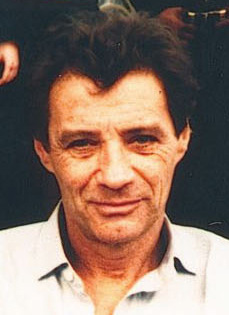 Jean-Luc Brunel