When investigating criminal enterprises, prosecutors often say "follow the money." In the Epstein document archive, a different principle applies: follow the paperwork. The sheer volume of shared documents between individuals reveals not just who knew whom, but who controlled access, managed operations, and maintained the infrastructure that enabled years of alleged criminal activity.
The numbers tell a story that challenges popular narratives about Epstein's organization.
The Dominant Connection: Groff's Outsized Presence
Lesley Groff appears in 31,897 shared documents with Jeffrey Epstein—a staggering figure that represents nearly 15 times the number of documents connecting Epstein to Ghislaine Maxwell (2,152 documents). This disparity is not merely statistical noise; it reflects fundamental organizational realities.
Groff served as Epstein's assistant for years, managing schedules, coordinating travel, and handling correspondence. The document volume suggests she functioned as a central hub through which most operational communications flowed. Every flight arrangement, every appointment, every logistical detail of Epstein's daily life appears to have passed through her hands or at minimum, her email inbox.
This pattern indicates that while Maxwell may have played a more public-facing role in Epstein's social circle and has faced more serious legal charges, Groff occupied a position of potentially greater administrative control. Documents show her name on flight manifests, scheduling emails, and coordination messages that paint a picture of someone who knew where Epstein was, who he was meeting, and what resources he required—at all times.
The Pilot's Paper Trail
Larry Visoski, Epstein's longtime pilot, shares 2,230 documents with both Epstein and Groff. This triangular relationship makes operational sense: a pilot requires constant coordination with both the principal and his primary assistant. Flight logs, maintenance records, scheduling adjustments, passenger manifests, and customs documentation all require multiple parties to review and approve.
What's notable about Visoski's document count is its consistency with his role. Unlike Groff's overwhelming administrative presence, Visoski's papers reflect a specific, bounded function: aviation operations. The documents likely include years of flight logs—evidence that became central to multiple investigations and civil cases, as these logs documented who traveled where and when on Epstein's private aircraft.
Visoski testified publicly during the Ghislaine Maxwell trial, providing details about passengers he observed over decades of flights. The 2,230 documents connecting him to Epstein and Groff represent the paper trail underlying that testimony—the contemporaneous records created during normal operations that later became evidence.
Maxwell's Surprisingly Modest Document Count
Ghislaine Maxwell shares 2,152 documents with Jeffrey Epstein—comparable to the pilot's count, but surprisingly low given her alleged role as Epstein's primary accomplice. Maxwell faced federal charges for recruiting and grooming underage girls, yet her documentary footprint is fourteen times smaller than Lesley Groff's.
Several factors might explain this disparity. First, Maxwell may have conducted more of her interactions with Epstein in person or by phone rather than email, leaving less documentary evidence. Second, the documents in the archive may reflect specific time periods or document sources that capture administrative operations (where Groff operated) more completely than social coordination (Maxwell's alleged domain).
Third, and perhaps most significantly, Maxwell may have been more cautious about creating paper trails. Records indicate she understood operational security—using multiple email addresses, limiting written communications about sensitive matters, and operating through intermediaries. If Maxwell consciously minimized documentation of her activities, that caution would manifest exactly as these numbers suggest: a surprisingly small documentary footprint despite an allegedly central role.
The Science Advisor's Extensive Connection
Boris Nikolic appears in 2,073 shared documents with Epstein—nearly matching Maxwell's count despite receiving far less public attention. Nikolic served as Bill Gates's science advisor and maintained a professional relationship with Epstein focused on scientific philanthropy and investments in biotech ventures.
The high document count suggests frequent interaction, likely related to Epstein's efforts to position himself within elite scientific circles. Records indicate Epstein donated to various scientific institutions and sought to fund cutting-edge research. Nikolic appears to have been a key intermediary in these efforts, explaining the substantial paper trail.
Notably, Nikolic was named as a backup executor in Epstein's will—signed just two days before Epstein's death in August 2019—though Nikolic quickly declined the role. The 2,073 documents shared between them provide context for why Epstein might have considered Nikolic for such a position: years of communication and collaboration on projects that apparently created substantial mutual documentation.
Jane Doe: The Human Cost in Numbers
One "Jane Doe" appears in 1,836 shared documents with Epstein. This represents a victim whose identity remains protected but whose documentary presence is substantial—more than Maxwell, nearly as much as Nikolic. The volume suggests either a victim who maintained contact over an extended period, who participated extensively in legal proceedings, or whose case generated substantial investigative documentation.
The Jane Doe designation could represent depositions, witness statements, communications admitted as evidence, or investigative reports. Each document in this count represents a piece of a victim's story—preserved in the archive as evidence of alleged crimes.
This number serves as a stark reminder that behind the organizational charts and administrative records are real people who suffered real harm. While we analyze Groff's 31,897 documents as evidence of operational control, we must remember that Jane Doe's 1,836 documents represent something entirely different: a survivor's accounting of abuse.
What the Network Structure Reveals
Taken together, these document counts reveal a clear organizational structure:
- Administrative Core: Lesley Groff (31,897 documents) functioned as the operational center, through whom most daily business flowed
- Operational Support: Larry Visoski (2,230 documents) provided specialized services requiring regular coordination
- Social/Criminal Operations: Ghislaine Maxwell (2,152 documents) maintained a substantial but surprisingly modest documentary presence
- Professional Network: Boris Nikolic (2,073 documents) represented Epstein's efforts at legitimacy through scientific connections
- Victims: Jane Doe (1,836 documents) represents the human cost, documented through investigation and legal process
This structure suggests Epstein's operation functioned like many criminal enterprises: with clear separation between administrative functions (Groff), tactical operations (Maxwell), specialized services (Visoski), and external legitimacy (Nikolic). The administrative layer generated the most documentation because it touched every aspect of operations. The criminal layer generated less documentation, likely by design. The legitimacy layer generated substantial documentation because that was the point—creating a paper trail of respectability.
The Archive as Organizational Chart
Document frequency serves as a rough proxy for operational centrality. Groff's overwhelming presence suggests she was indispensable to daily operations. Maxwell's more modest count suggests either caution about documentation or a role that relied less on written communication. Visoski's focused count reflects bounded, specialized responsibilities. Nikolic's substantial presence reflects years of professional interaction unrelated to alleged crimes.
And Jane Doe's documents remind us that at the center of every criminal investigation are victims whose stories become evidence, whose testimony becomes depositions, whose suffering becomes case files.
The Epstein archive contains 1.43 million documents. These connection counts represent tiny fractions of that total, yet they reveal the organizational skeleton beneath: who coordinated, who operated, who facilitated, and who suffered. Numbers, it turns out, can tell stories—if you know how to read them.
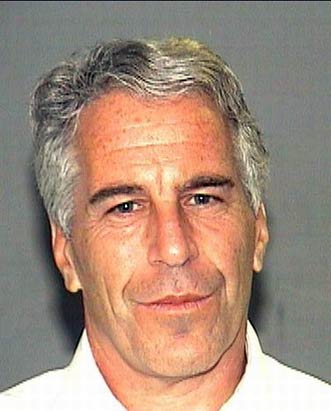 Jeffrey Epstein
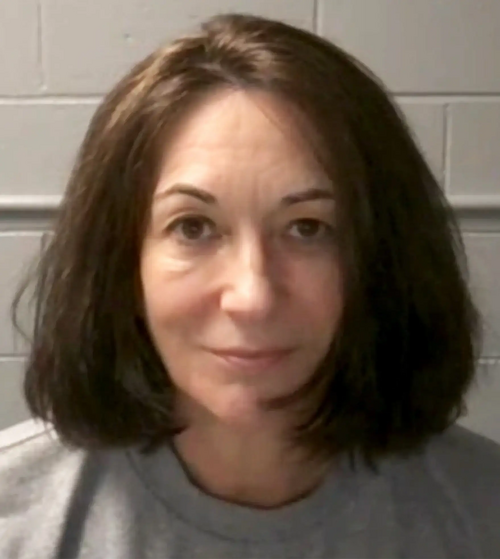 Ghislaine Maxwell