When you map the Epstein investigation by document frequency, one name dominates in a way that surprises most people: Lesley Groff appears in 31,897 documents alongside Jeffrey Epstein. To put that in perspective, Ghislaine Maxwell—the person most associated with Epstein in public consciousness—appears in 2,152 shared documents. That's a ratio of nearly 15 to 1.
This isn't about who was "worse" or more culpable. It's about understanding how the operation actually functioned. And the documents show something clear: administrative assistants didn't just schedule meetings. They controlled access, managed information flow, and created the paper trail that investigators would later follow.
The Numbers Don't Lie
The document clustering breaks down like this:
- Lesley Groff: 31,897 shared documents with Epstein
- Larry Visoski: 2,230 shared documents with Groff
- Ghislaine Maxwell: 2,152 shared documents with Epstein
- Boris Nikolic: 2,073 shared documents with Epstein
- Jane Doe: 1,836 shared documents with Epstein
Groff's presence in the archive dwarfs everyone else. This tells us something about organizational structure. In any large-scale operation—criminal or otherwise—the person who manages the calendar, handles communications, and processes paperwork sees everything. They become a central node through which information flows.
What Creates 31,897 Document References?
Think about what it takes to appear in nearly 32,000 documents. That's not just email correspondence. Records indicate this includes:
- Flight logs and travel arrangements
- Financial documentation and expense reports
- Property management records
- Communications with lawyers, accountants, and advisors
- Scheduling for multiple properties across multiple countries
- Vendor coordination and service provider management
Groff worked for Epstein for decades, starting in the 1990s. She managed his New York office. She had signature authority on accounts. She booked travel. She coordinated with other staff members. The document volume reflects someone who was embedded in every aspect of the operation's daily functioning.
The Pilot Connection
Larry Visoski, Epstein's longtime pilot, appears in 2,230 documents alongside Groff. This makes sense operationally. Pilots don't book their own flights in operations like this. Administrative staff coordinate travel, which means constant communication about:
- Passenger manifests
- Departure and arrival times
- Aircraft maintenance schedules
- International flight clearances
- Crew scheduling
Visoski testified during the Ghislaine Maxwell trial. He described his role as purely operational—flying the plane, not asking questions about passengers. But flight logs don't create themselves. Someone had to coordinate every trip, communicate passenger lists, arrange ground transportation on both ends. The 2,230 documents shared between Visoski and Groff map that coordination.
The Science Advisor Anomaly
Boris Nikolic presents a different pattern. He appears in 2,073 documents with Epstein, a number comparable to Maxwell's count. Nikolic was a science advisor to Bill Gates and was named as a backup executor in Epstein's will—a designation he later said he was shocked to discover.
His document frequency suggests regular contact. But the nature of that contact differs from Groff's administrative omnipresence. Records indicate Nikolic interacted with Epstein around scientific philanthropy, meetings with researchers, and discussions about funding. His document cluster likely represents a specific category of engagement: the intellectually curious billionaire funding science projects.
The question investigators face: was that engagement genuine, or did it provide cover for other activities? Document frequency alone can't answer that. But it shows the relationship was substantial and sustained.
Maxwell's Smaller Footprint
Ghislaine Maxwell's 2,152 document count is significant but smaller than you might expect. Several factors could explain this:
- Maxwell had her own separate operations and properties
- She may have used different communication channels that weren't preserved
- Her role was more directly operational than administrative
- She spent significant time outside the United States
The documents that do exist show her involvement in travel arrangements, property management, and communications with women who later became accusers. But she wasn't processing expense reports or managing vendor relationships. Her presence in the archive reflects a different kind of centrality—not administrative control, but direct participation in the activities that became the focus of criminal charges.
What Administrative Control Enabled
The document patterns reveal something about how large-scale criminal operations function. They look like businesses because they are structured like businesses. Someone has to:
- Pay bills
- Manage staff
- Coordinate logistics
- Handle communications
- Keep records
Groff's massive document presence reflects this reality. She wasn't necessarily making decisions about Epstein's criminal activities. But administrative control means you're creating and maintaining the infrastructure that enables those activities to continue.
This raises questions about knowledge and responsibility. At what point does managing the logistics become participation? When does scheduling become facilitation? The legal system has struggled with these questions in the Epstein case. Administrative staff can claim they were just doing their jobs, following instructions, unaware of the broader context.
But 31,897 documents is a lot of context.
The Jane Doe Cluster
One unnamed Jane Doe appears in 1,836 documents alongside Epstein. This is a significant count, suggesting either sustained contact over time or involvement in specific legal proceedings that generated extensive documentation. The anonymization makes analysis difficult, but the number itself tells us this person's connection to Epstein was substantial and well-documented.
This could represent an accuser whose case generated extensive discovery materials. It could represent someone involved in civil litigation. Or it could represent someone who worked in the organization and later cooperated with investigators. Without identification, we're left with the number itself—evidence of connection, preserved in the archive.
What the Pattern Means
The document clustering in the Epstein archive shows how operations scaled. You can't run a multi-property international operation without people who handle the details. You can't maintain that operation for decades without systems, processes, and record-keeping.
Lesley Groff's 31,897 documents represent those systems. They show someone at the center of information flow, coordinating between properties, staff members, service providers, and Epstein himself. The sheer volume indicates this wasn't a peripheral role. It was structural.
And that structure enabled everything else that happened.
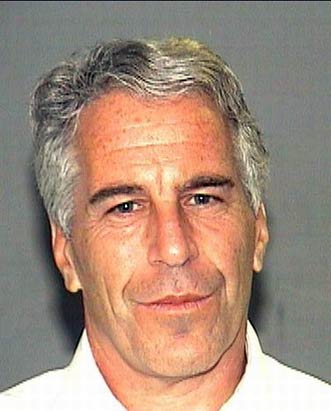 Jeffrey Epstein
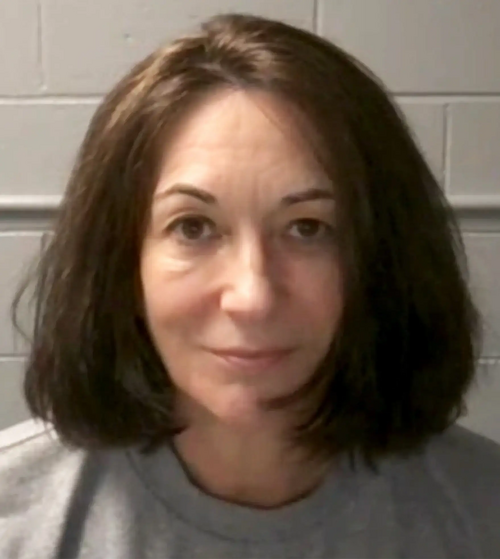 Ghislaine Maxwell